

AA Plasma and NASA Kennedy Space Center Present New Research on Plasma-Based Destruction of Ethylene Oxide
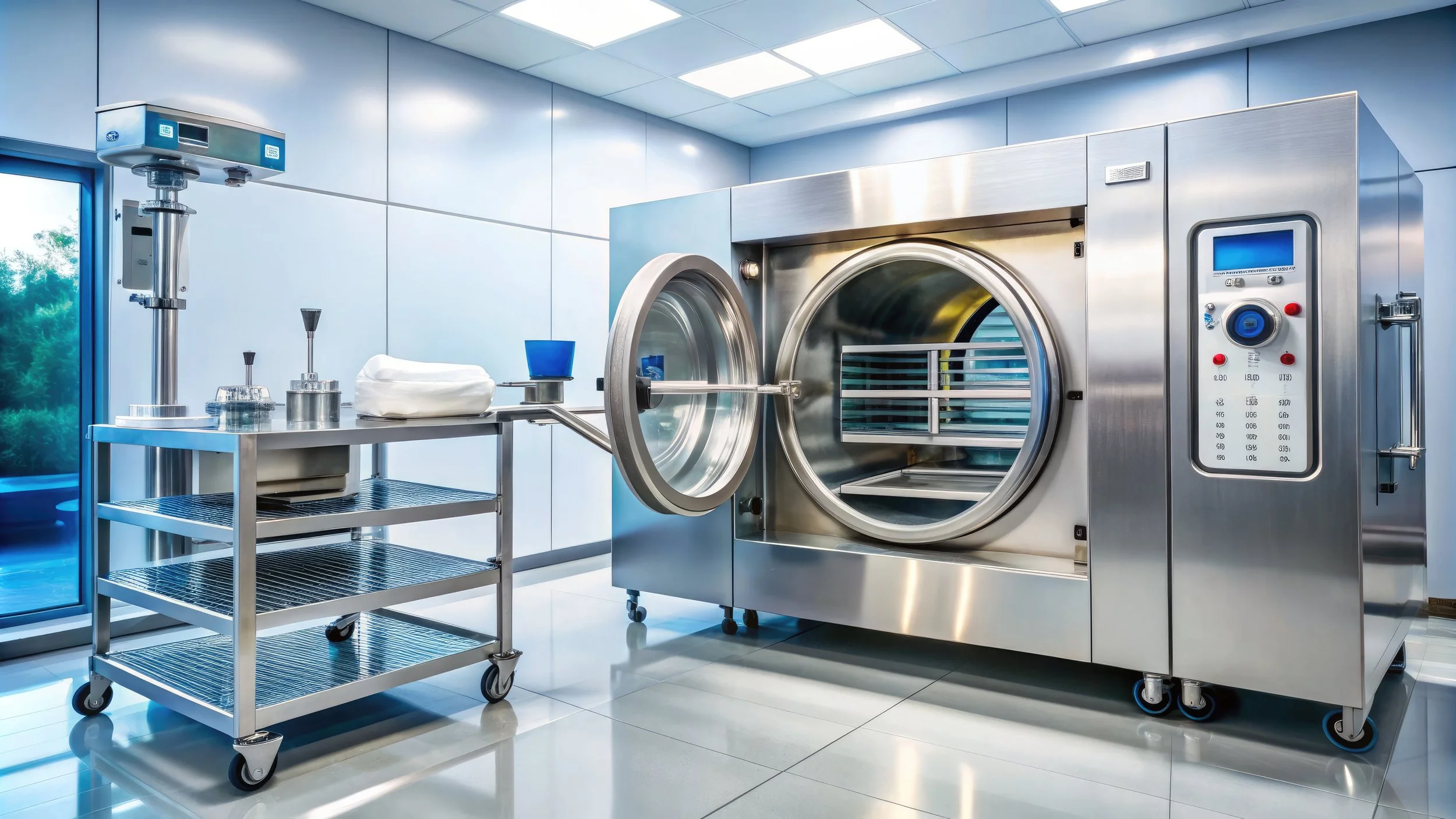
Researchers at NASA's Kennedy Space Center (KSC) together with AAPlasma’s team have published new findings on plasma-driven systems that break down ethylene oxide (ETO), a toxic gas widely used as an industrial sterilant. Preliminary results show greater than 80% ETO destruction, even in a single pass through the system.
The paper, "Plasma-Assisted Ethylene Oxide Breakdown for Spacecraft and Sterilization Systems" (ICES-2026-482), was presented at the 55th International Conference on Environmental Systems, held July 12-16, 2026, in Rio Grande, Puerto Rico, as part of the session on physico-chemical life support and air revitalization systems. The author team includes Carolina Franco, Jason Fischer, Lucy Somervill, Jessica Schwend, Joel Olson, Tracy Gibson, Kenneth Engeling, Ryan Gott, and Morgan Crabtree of NASA KSC, alongside Greg Fridman and Charles Bailey of AA Plasma.
The problem it targets
Long-duration spaceflight requires air-quality control technology that can destroy volatile organic compounds (VOCs) and other hazardous contaminants on demand, without adding significant mass, power, or consumable requirements to a spacecraft's closed-loop atmosphere. Ethylene oxide is a particular concern: it's an effective sterilant used widely on Earth for medical devices and hardware, but it's also toxic and flammable, so any system relying on it needs a reliable way to break it down afterward. Conventional destruction methods can be bulky, power-hungry, or slow, none of which fit the constraints of a spacecraft or a compact ground-based sterilization system.
How the systems work
The work builds on earlier plasma-assisted VOC degradation studies KSC has run on compounds including ethanol, acetone, and benzene, which produced operational data the team applied directly to ETO. AA Plasma and KSC designed, built, and tested plasma-driven degradation systems in both single-pass and recirculation configurations. Across configurations, the systems showed fast contaminant destruction, a compact footprint, and tolerance to variable atmospheric conditions. The single-pass configuration alone, the simplest and least energy-intensive setup, achieved better than 80% ETO degradation.
What it means for AA Plasma
The paper positions the KSC collaboration as a bridge from prior plasma VOC research toward a deployable system for continuous ETO mitigation, useful for both spacecraft environmental control and terrestrial sterilization equipment. It extends AA Plasma's ongoing air revitalization work with NASA Kennedy Space Center and adds ETO to the list of contaminants its plasma systems have been shown to destroy effectively.
Franco, C., Fischer, J., Somervill, L.G., Schwend, J., Olson, J., Gibson, T., Engeling, K., Gott, R., Crabtree, M., Fridman, G., Bailey, C. "Plasma-Assisted Ethylene Oxide Breakdown for Spacecraft and Sterilization Systems." ICES-2026-482, 55th International Conference on Environmental Systems, Rio Grande, Puerto Rico, July 12-16, 2026. Full paper: https://ttu-ir.tdl.org/items/5d2bcab8-e43f-4723-bc1e-2abf04106227