

New Peer-Reviewed Study Reveals How Gliding Arc Plasma Destroys PFAS in Water
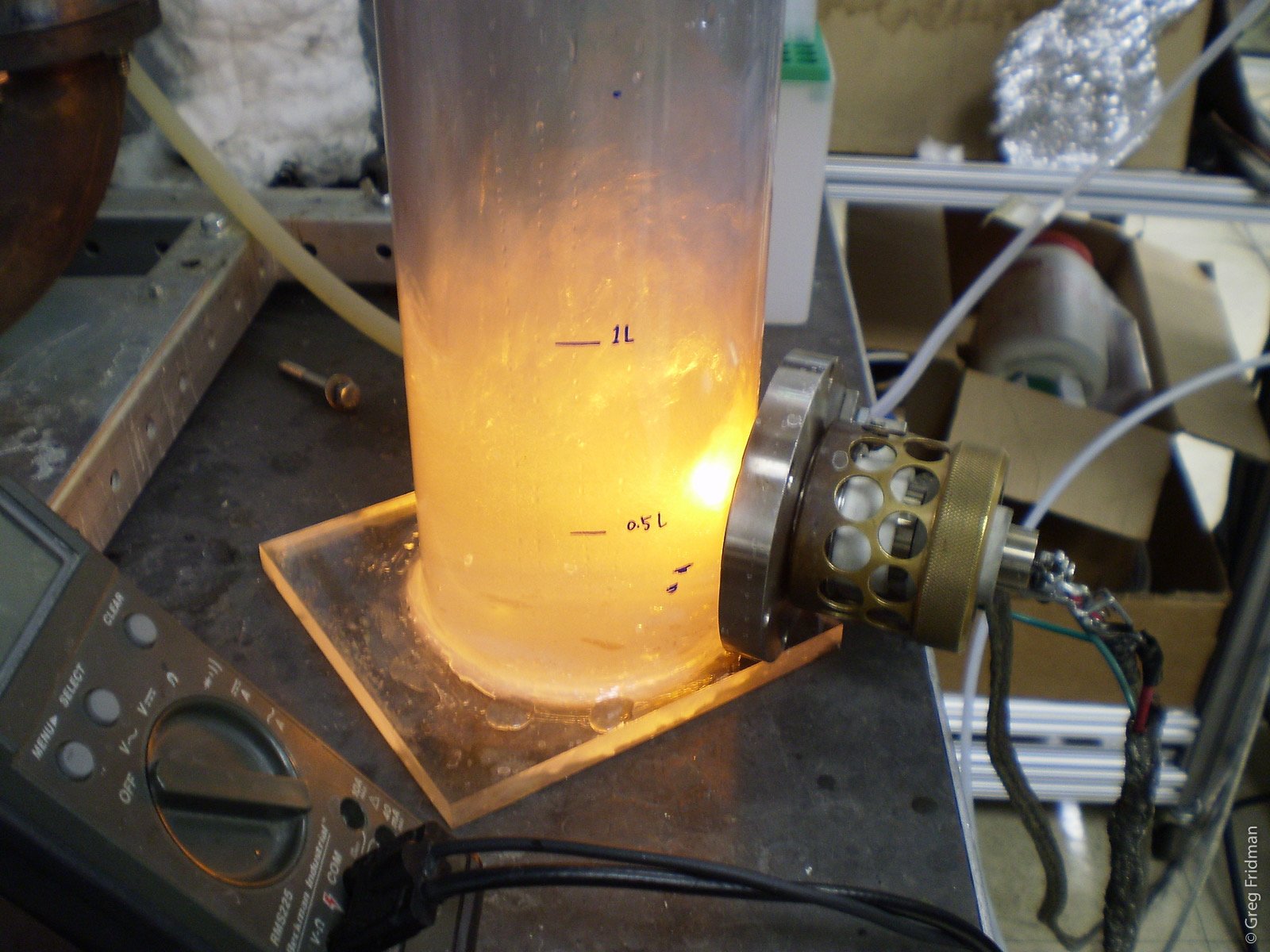
Grove City, OH — AAPlasma LLC is proud to announce the publication of a new peer-reviewed research paper, "Unraveling the Role of Gas-Phase Plasma Species in PFAS Degradation During Treatment of Contaminated Water with Submerged Gliding Arc Plasma (GAP) Discharge," in Plasma Chemistry and Plasma Processing (2026). The work was conducted in collaboration with Drexel University's C&J Nyheim Plasma Institute and Temple University, and funded by the Strategic Environmental Research and Development Program (SERDP).
The study provides the first experimental evidence that gas-phase charged particles (not just aqueous reactive species) are essential drivers of PFAS mineralization during gliding arc plasma (GAP) water treatment. Using a grounded metal mesh to trap and neutralize charged particles in the plasma gas, researchers showed that blocking these species completely halted fluoride production (a key indicator of PFAS breakdown) across three different PFAS compounds: 6:2 FTS, PFOA, and PFOS.
Based on these findings, the team proposes three likely pathways for PFAS degradation during GAP treatment:
Thermal mineralization initiated by gas-phase charged particles,
H/F exchange driven by free electrons at the plasma-water interface or hydrated electrons in the bulk liquid, and
Fragmentation via charge transfer from gas-phase charged particles.
These insights directly inform how AAPlasma designs and scales its GAP-based water treatment systems, highlighting the need to maximize contact between gas-phase charged particles and contaminated water as a key lever for improving destruction efficiency.
"This study confirms something we've suspected for years: the real chemistry in plasma water treatment isn't just happening in the liquid, it's happening at the boundary between gas and water. Understanding that gas-phase particles are doing the heavy lifting changes how we think about reactor design moving forward." — Dr. Gregory Fridman, CEO, AAPlasma LLC.
The full open-access paper is available via Springer at doi.org/10.1007/s11090-026-10688-y.