

AAPlasma’s OxyFog System Featured in New Food Safety Study on Sustainable Seed and Sprout Decontamination
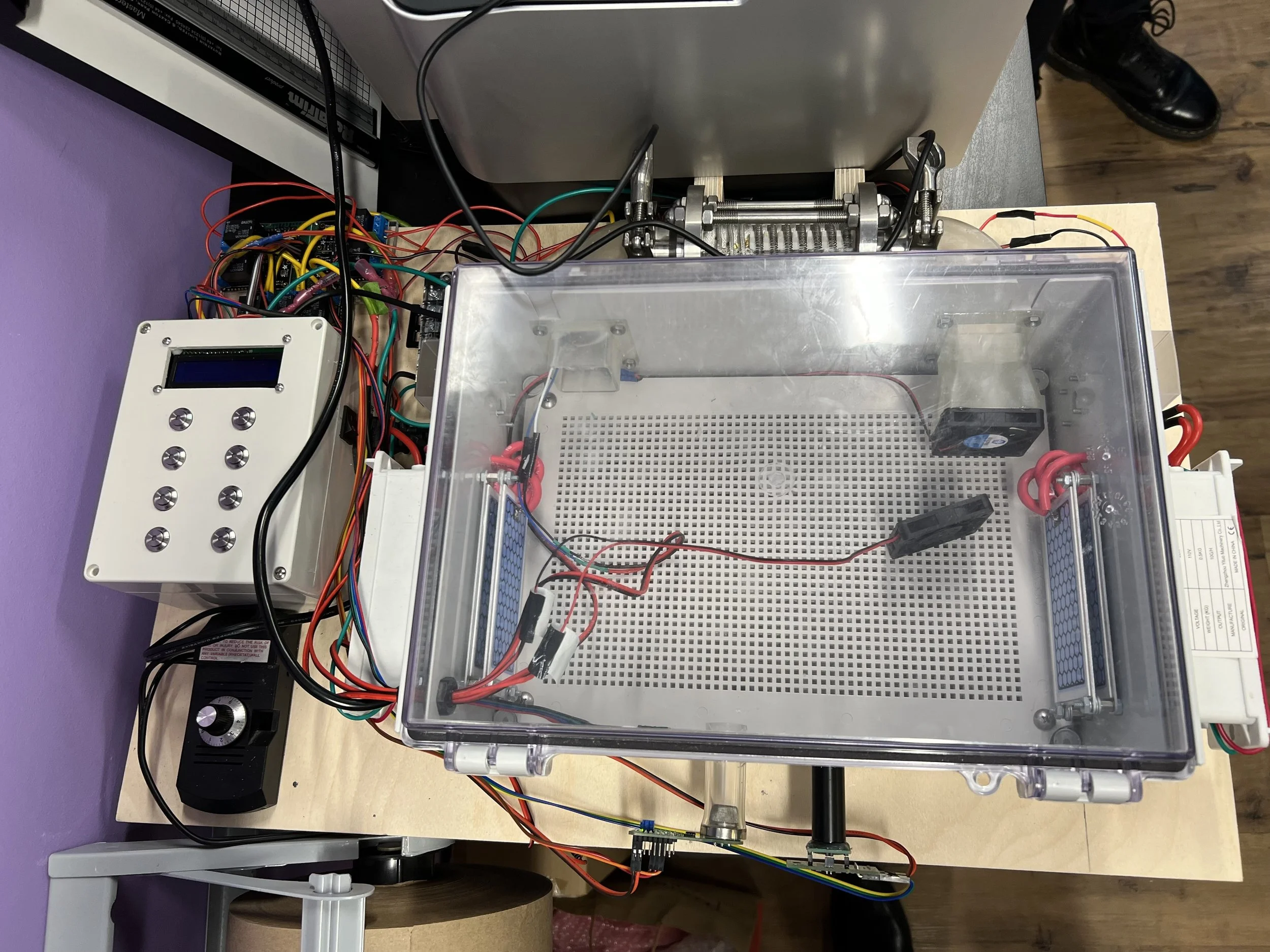
Photo of the early OxyFog prototype.
A recently published study in Food Research International evaluated ozone and non-thermal plasma as sustainable alternatives to chlorine-based sanitizers for improving the microbial safety of alfalfa seeds and sprouts. The paper, titled “Ozone and non-thermal plasma as sustainable alternatives to chlorine for decontamination of alfalfa seeds and sprouts,” was authored by researchers from The Ohio State University and Michigan State University and included testing with AAPlasma LLC’s OxyFog non-thermal plasma system.
Alfalfa sprouts remain a challenging food safety target because the warm, moist conditions required for sprouting also support the growth of foodborne pathogens. The study notes that sprout-associated outbreaks have involved pathogens such as Shiga toxin-producing Escherichia coli and Salmonella, with seeds often serving as the initial contamination source. Because sprouts are commonly eaten raw, effective decontamination methods are needed early in production, before pathogens have an opportunity to multiply.
Traditional seed decontamination often relies on high concentrations of chlorine-based sanitizers, including calcium hypochlorite at concentrations as high as 20,000 ppm. While effective, these treatments raise concerns related to worker safety, odor, rinsing requirements, potential disinfection byproducts, and restrictions in some markets and production systems. The study therefore compared chlorine treatment against two residue-free alternatives: aqueous ozone and non-thermal plasma.
For the non-thermal plasma portion of the work, the researchers used AAPlasma’s OxyFog system, described in the paper as a chamber-based plasma generator equipped with two dielectric barrier discharge plasma generators, a recirculation fan, a post-treatment radical removal system, and water nebulizers for mist-assisted plasma treatment. The system generated plasma in atmospheric air and allowed the researchers to compare both dry plasma and mist plasma treatment modes.
The study evaluated alfalfa seeds and freshly prepared sprouts inoculated with STEC at both high and low contamination levels. Samples were treated with aqueous ozone, dry non-thermal plasma, mist non-thermal plasma, or calcium hypochlorite, and the researchers measured reductions in recoverable pathogen populations after treatment. At high contamination levels, ozone and plasma treatments produced reductions that were often statistically comparable to chlorine treatment. At lower contamination levels, chlorine generally produced the largest reductions, but ozone and plasma still showed meaningful antimicrobial activity.
One important finding was that OxyFog’s mist plasma mode generally performed slightly better than dry plasma under several conditions. The authors attributed this improvement to the presence of humidity, which can support the generation and transfer of reactive oxygen and nitrogen species to microbial cells. These reactive species are central to the antimicrobial mechanism of non-thermal plasma and can damage cell membranes, proteins, and nucleic acids.
Equally important, the study found that the tested ozone and plasma treatments did not adversely affect key quality measures. Seed germination remained high across treatments, and sprout length, sprout weight, and visual color parameters were largely preserved. This is significant because a practical food safety intervention must reduce microbial risk without damaging the product or reducing commercial quality.
The authors concluded that aqueous ozone and non-thermal plasma are promising, residue-free alternatives to traditional chlorine-based approaches for decontaminating alfalfa seeds and sprouts. They also noted that additional optimization and validation at larger scale will be needed before commercial implementation. For AAPlasma, this publication provides an important independent demonstration of OxyFog’s relevance in food safety research and its potential role in next-generation, non-chemical decontamination systems.
At AAPlasma, we are excited to see OxyFog used in peer-reviewed research addressing real-world food safety challenges. Non-thermal plasma offers a flexible platform for generating short-lived reactive species directly at the point of use, without the need for persistent chemical residues. Studies like this help define where plasma-based approaches already perform well, where further optimization is needed, and how these technologies may eventually support safer and more sustainable food production.
Reference:
Ali, M. G., Abdelhamid, A. G., & Yousef, A. E. “Ozone and non-thermal plasma as sustainable alternatives to chlorine for decontamination of alfalfa seeds and sprouts.” Food Research International 233, 118928, 2026.